How to Control Diabetes Daily: Self-Care System for Stable Blood Sugar
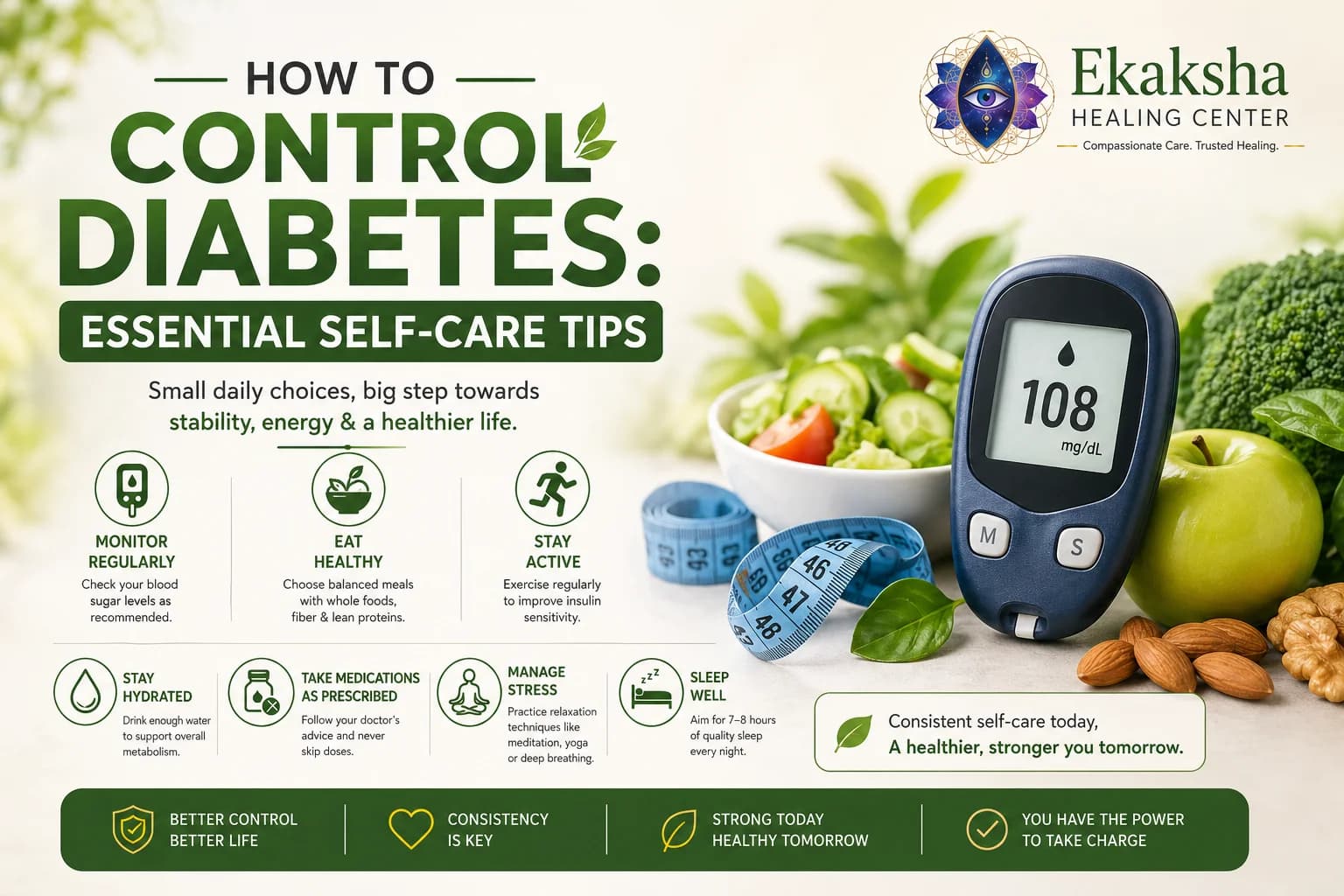
A practical, science-based diabetes self-care guide for Indian families: meals, activity, sleep, stress, medicine routine, and long-term complication prevention.
Most people do not struggle with diabetes because they lack information. They struggle because advice is scattered, unrealistic, and hard to follow in daily life. This guide solves that problem by giving a complete self-care system you can actually sustain.
If your goal is better energy, lower HbA1c, stable readings, and fewer long-term complications, this is the roadmap.
What is diabetes and why does self-care matter?
Diabetes is a chronic condition in which blood glucose remains higher than normal because insulin is not sufficient or does not work effectively. Type 2 diabetes, the most common form, is strongly influenced by lifestyle patterns.
Self-care matters because diabetes is managed mostly outside the clinic:
- What you eat daily
- How much you move
- Whether medicine timing is regular
- How well you sleep
- How you handle stress
Clinic advice works only when home execution is consistent.
Causes
Type 2 diabetes usually develops from multiple risk factors:
- Family history
- Abdominal obesity
- Sedentary lifestyle
- Refined-carb heavy diet
- Poor sleep
- Chronic stress
- Prediabetes ignored for years
- History of gestational diabetes
In urban settings, late dinners, desk jobs, stress eating, and weekend-only activity worsen insulin resistance.
Symptoms
Many people miss early signs:
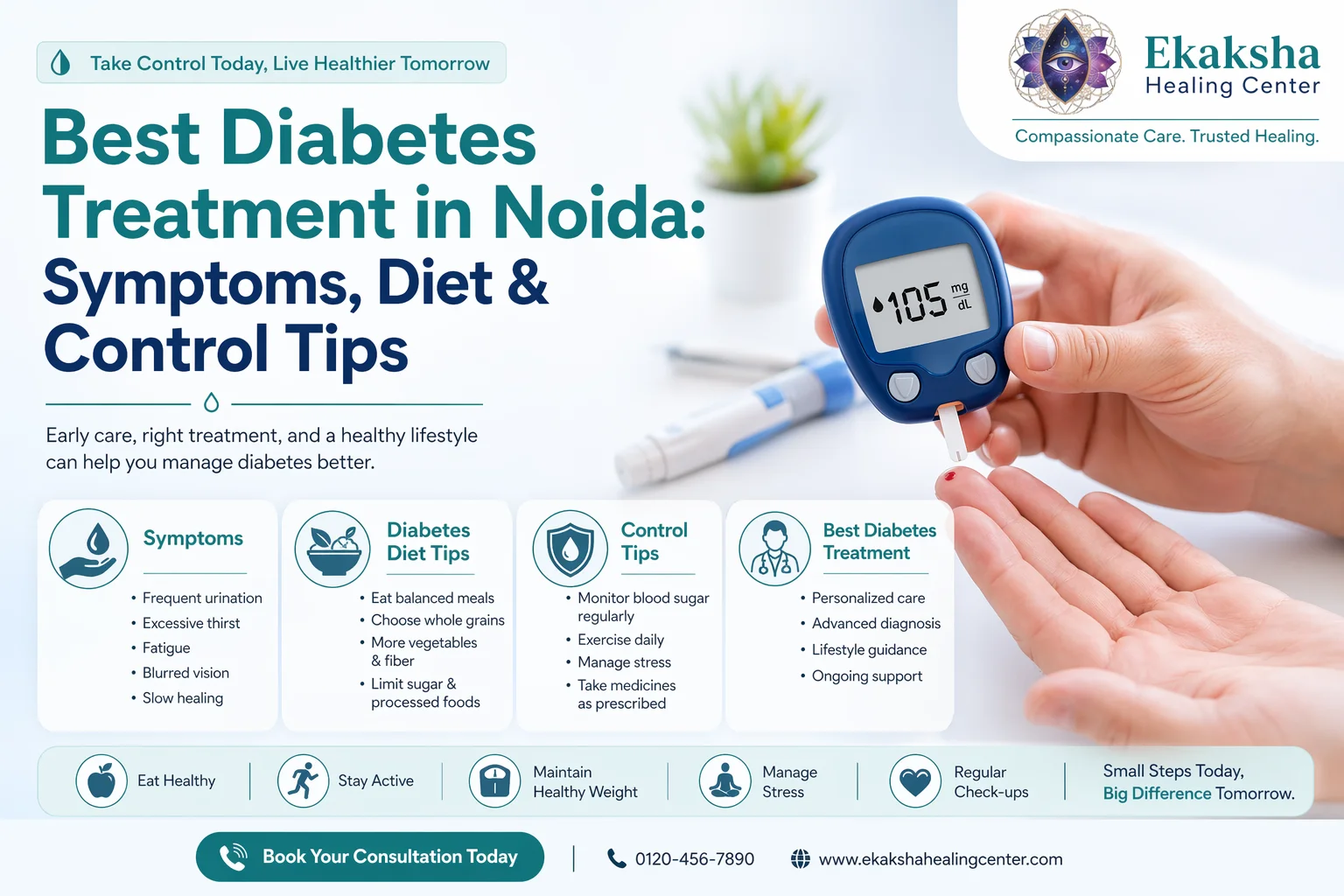
- Frequent urination
- Excessive thirst
- Fatigue
- Increased hunger
- Blurry vision
- Slow wound healing
- Recurrent infections
- Tingling in feet
If symptoms are present, do not delay testing.
Main Solution Section: The 12-Step Diabetes Self-Care Framework
Step 1: Start with a baseline
Get these tests:
- Fasting glucose
- Post-meal glucose
- HbA1c
- Lipid profile
- Kidney and liver function
- Urine microalbumin
- Blood pressure and waist measurement
Without baseline data, treatment is guesswork.
Step 2: Set realistic targets
Your targets should be personalized, but many adults are advised:
- HbA1c around 7% or lower depending on profile
- Fasting and post-meal glucose targets individualized
Avoid comparing your numbers blindly with others.
Step 3: Build fixed meal timing
- Do not skip breakfast regularly.
- Keep meals at predictable times.
- Avoid long gaps followed by overeating.
- Keep dinner earlier and lighter.
Stable meal timing reduces glucose variability.
Step 4: Use the Indian plate method
At lunch and dinner:
- 50% non-starchy vegetables
- 25% protein
- 25% complex carbs
This one rule simplifies food decisions and reduces post-meal spikes.
Step 5: Improve carb quality
Choose:
- Millets
- Oats
- Dalia
- Whole pulses
- Controlled rice/roti portions
Avoid frequent refined carbs:
- White bread
- Bakery snacks
- Sugary cereals
- Maida foods
Step 6: Add protein in each meal
Better protein choices:
- Dal + curd
- Paneer/tofu
- Eggs
- Fish/chicken (if non-vegetarian)
- Sprouts + nuts
Protein improves satiety and lowers glucose spikes when paired with carbs.
Step 7: Move every day, not just weekends
Evidence-based target:
- 150 minutes moderate activity weekly
- 2 or more days resistance training
Practical model:
- 10 to 15 minute walk after meals
- 30 to 45 minute brisk walk most days
- Bodyweight or light strength training twice weekly
Step 8: Medication adherence system
- Set phone alarms
- Carry backup dose when traveling
- Refill before stock ends
- Never self-stop medicines on temporary improvement
This one step alone improves outcomes significantly.
Step 9: Use smart glucose monitoring
Monitor trend, not panic:
- Fasting
- Post-meal
- Symptom-linked checks
Keep a simple record with:
- Reading
- Meal timing
- Activity
- Medicine timing
This helps your doctor make accurate treatment adjustments.
Step 10: Sleep as metabolic therapy
- 7 to 8 hours nightly
- Fixed sleep/wake timing
- Avoid screen stimulation late night
- Reduce late caffeine
Chronic sleep debt increases insulin resistance.
Step 11: Stress control protocol
Daily 10 to 15 minute routine:
- Deep breathing
- Guided relaxation
- Prayer or meditation
- Journal dump before bed
Stress hormones can raise glucose even when diet is controlled.
Step 12: Quarterly review cycle
Every 3 months:
- HbA1c review
- Weight and waist trend
- BP and lipid trend
- Medicine optimization
This is the difference between short-term improvement and long-term control.
Home Remedies / Natural Support
Home supports may help as adjuncts:
- Methi seeds
- Karela in meals
- Cinnamon in moderate amount
- Fiber-rich vegetables
Important:
- These are supportive, not curative.
- They should never replace prescribed treatment.
Diet Plan (Indian-Friendly)
Simple daily structure
- Early morning: Water + soaked nuts
- Breakfast: Protein-rich (chilla/eggs/oats + curd)
- Mid-meal: Fruit in portion
- Lunch: Salad + dal/protein + controlled roti/rice
- Evening snack: Roasted chana/sprouts
- Dinner: Light protein + vegetables
- Post-dinner: Short walk
Weekly meal planning tips
- Pre-cut vegetables for 2 days
- Keep healthy snack box ready
- Plan travel-safe snacks
- Use Sunday prep for weekday control
Foods to Avoid
- Sugary drinks
- Frequent sweets and desserts
- Refined flour snacks
- Deep-fried fast food
- Late-night heavy dinners
- Packaged high-sugar “health foods”
Lifestyle Modifications
For office workers
- Stand every 45 minutes
- Walk during calls
- Carry home lunch
- Avoid chai-biscuit loops
For homemakers
- Fixed meal timing
- Walk post lunch and dinner
- Family plate-style eating
For elderly patients
- Safer low-impact activity
- Hypoglycemia awareness
- Medication simplification
Complications
Uncontrolled diabetes can cause:
- Heart disease and stroke risk
- Kidney damage
- Retinal damage and vision loss
- Nerve injury and foot ulcers
- Delayed wound healing
- Gum and dental problems
Regular screening prevents silent progression.
When to See a Doctor
Consult promptly if:
- Readings stay high for days
- You have repeated low sugar episodes
- Fatigue and infections increase
- Numbness, blurry vision, or foot wounds appear
For expert diagnosis and personalized treatment, consult Ekaksha Healing Center in Sector 131 Noida.
If you want practical long-term management from the best doctor in Noida for chronic metabolic care, consult Dr. Mayank Anand at Ekaksha Healing Center, a trusted clinic in Sector 131 Noida.
People Also Ask
Can diabetes be controlled without complete diet restriction?
Yes. Portion control, carb quality, protein balancing, and meal timing often work better than extreme restriction.
How long does it take to improve HbA1c?
Meaningful change is often seen over 8 to 12 weeks with disciplined routine and proper treatment.
Is walking alone enough?
Walking is excellent, but adding resistance training improves insulin sensitivity further.
Should medicines be stopped once sugar improves?
No. Treatment changes should only be done with your doctor after sustained review.
How often should I see my doctor for diabetes?
Usually every 3 months when adjusting treatment, and every 6 months once stable, based on your condition.
Internal Linking Suggestions
- Read: Best Diabetes Treatment in Noida
- Learn: How to Control High Sugar Level Immediately at Home
- Read: Diabetes Diet Plan Guide
- Learn: Prediabetes Warning Signs
Conclusion
Diabetes control is a system, not a single medicine or one diet chart. If you commit to structured meals, daily movement, sleep discipline, stress control, and regular follow-up, you can achieve stable sugars and lower complication risk.
Consistency beats perfection. Start with the next meal, next walk, and next dose on time.
At Ekaksha Healing Center, we prioritize your health and well-being. If you have any concerns regarding this topic, consult Dr. Mayank Anand for expert guidance.
Frequently Asked Questions
Some early patients improve significantly with lifestyle changes, but many still need medicines. Treatment should be individualized by your doctor.
Need a consultation?
Get expert medical advice for your health concerns at Ekaksha Healing Center.
Book Appointment